My Role

Product Designer

Duration

Dec-24 to Jan-25

My Role

1 PM, 3 Developers

  1. Starting Point

We had a brief, not a product

We had a brief, not a product

My first job wasn't to open Figma. It was to figure out what problem we were actually solving.

My first job wasn't to open Figma. It was to figure out what problem we were actually solving.

"How do you build attendance software for workers who may be semi-literate, don't carry laptops, and are standing in dust and noise with 30 people behind them?"

"How do you build attendance software for workers who may be semi-literate, don't carry laptops, and are standing in dust and noise with 30 people behind them?"

  1. Problem Statement

Four ways the old system was failing

Paper check-ins. No location verification. Zero real-time visibility . Shift updates lost in Whatsapp

Paper check-ins. No location verification. Zero real-time visibility . Shift updates lost in Whatsapp

Failure 01

Data Intergrity

Attendance captured on paper, re-entered manually end of day. By the time payroll runs, the data has passed through too many hands to be reliable.

Attendance captured on paper, re-entered manually end of day. By the time payroll runs, the data has passed through too many hands to be reliable.

Failure 02

Location trust

No system to verify a worker is actually on-site. Anyone could log attendance from anywhere — buddy punching was completely undetectable.

No system to verify a worker is actually on-site. Anyone could log attendance from anywhere — buddy punching was completely undetectable.

Failure 03

Supervisor visibility

No real-time picture of who is on-site. Supervisors were making decisions without knowing who had actually shown up that morning.

No real-time picture of who is on-site. Supervisors were making decisions without knowing who had actually shown up that morning.

Failure 04

Communication reach

Shift updates going over WhatsApp — mixed with personal messages, no confirmation of receipt, no way to schedule announcements in advance.

Shift updates going over WhatsApp — mixed with personal messages, no confirmation of receipt, no way to schedule announcements in advance.

  1. Design Constraints

Designed for the real environment , not the ideal one.

Four non-negoitable set before a single wireframe

Four non-negoitable set before a single wireframe

10s

Check-in must complete in under 10 seconds

Attendance captured on paper, re-entered manually end of day. By the time payroll runs, the data has passed through too many hands to be reliable.

Attendance captured on paper, re-entered manually end of day. By the time payroll runs, the data has passed through too many hands to be reliable.

Tech

Assume low smartphone literacy

No onboarding flow, no tutorial — every screen had to be self-evident on first use for workers who interact with smartphones minimally.

No onboarding flow, no tutorial — every screen had to be self-evident on first use for workers who interact with smartphones minimally.

Net

Design for offline degradation, not just online success

Remote sites have unreliable connectivity. The product needed to handle offline states without blocking check-in — a first-class scenario, not an edge case.

Remote sites have unreliable connectivity. The product needed to handle offline states without blocking check-in — a first-class scenario, not an edge case.

Scale

Multi-site supervisor need unified visibility

A supervisor managing 3 job sites can't operate 3 separate logins. The mental model had to support site-level management from one place.

A supervisor managing 3 job sites can't operate 3 separate logins. The mental model had to support site-level management from one place.

Naming these four failure modes gave the team a shared framework. Every design decision could be mapped back to: which failure does this address, and does it create new ones?

Naming these four failure modes gave the team a shared framework. Every design decision could be mapped back to: which failure does this address, and does it create new ones?

  1. Design Decisions

Three decisions that defined the product

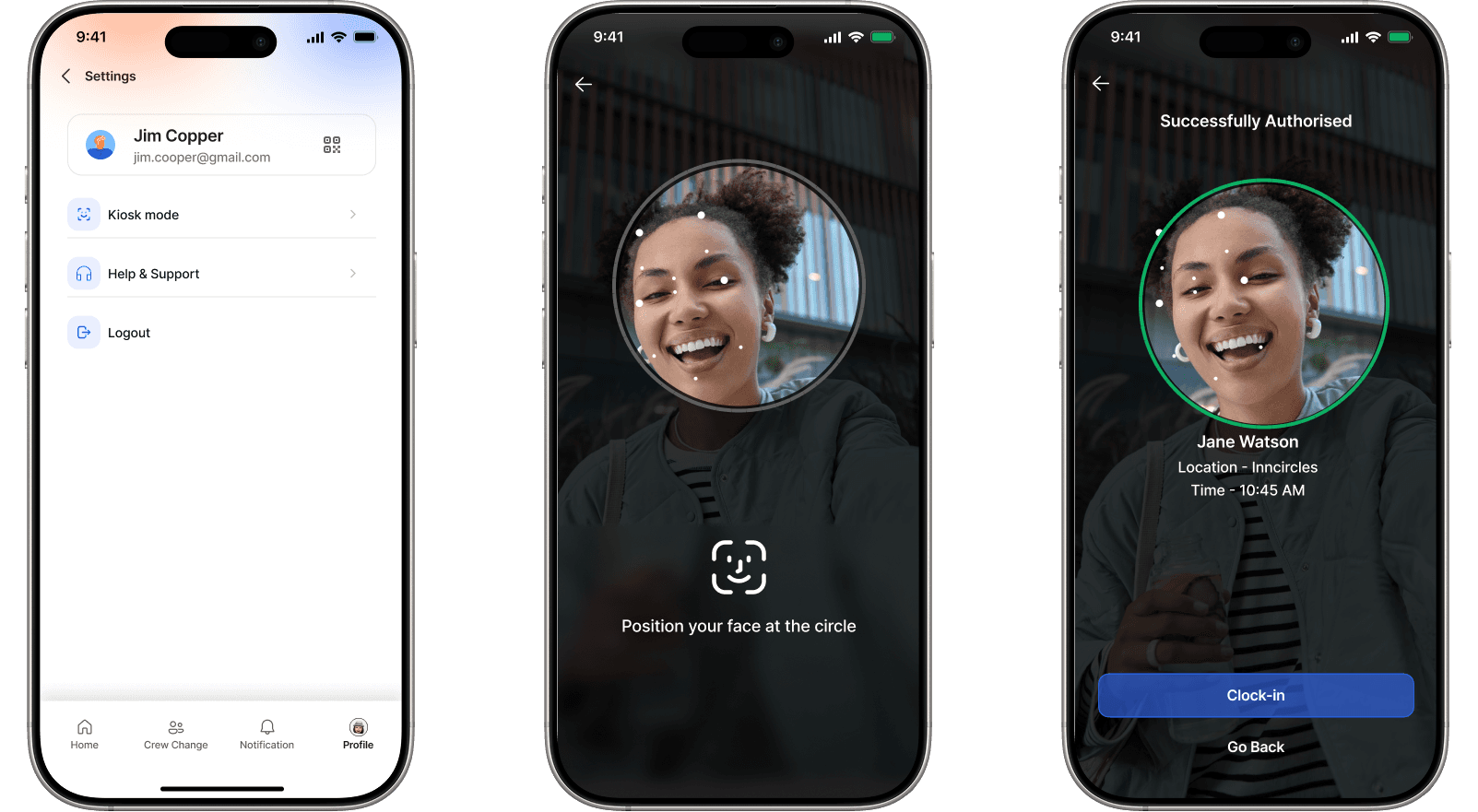
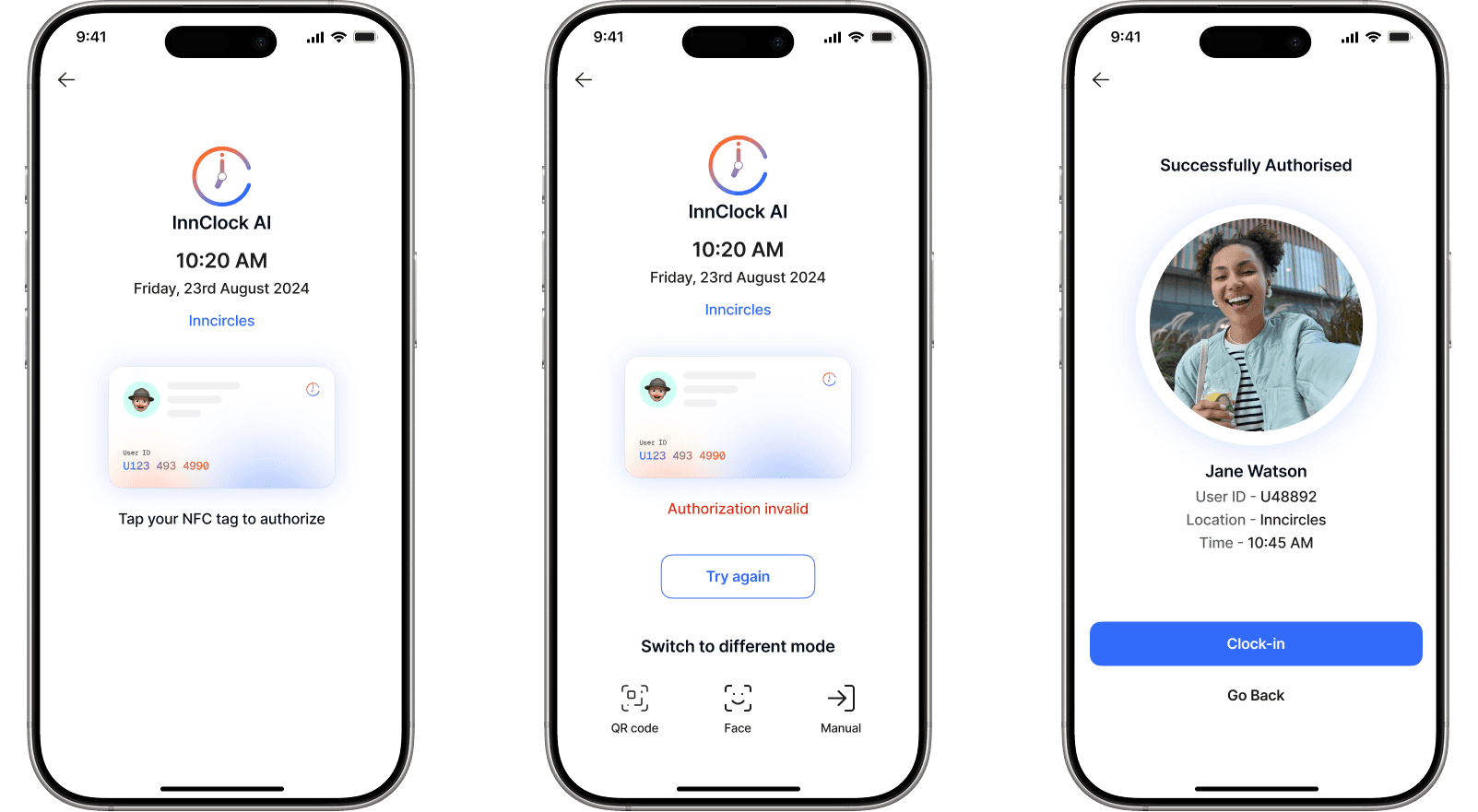
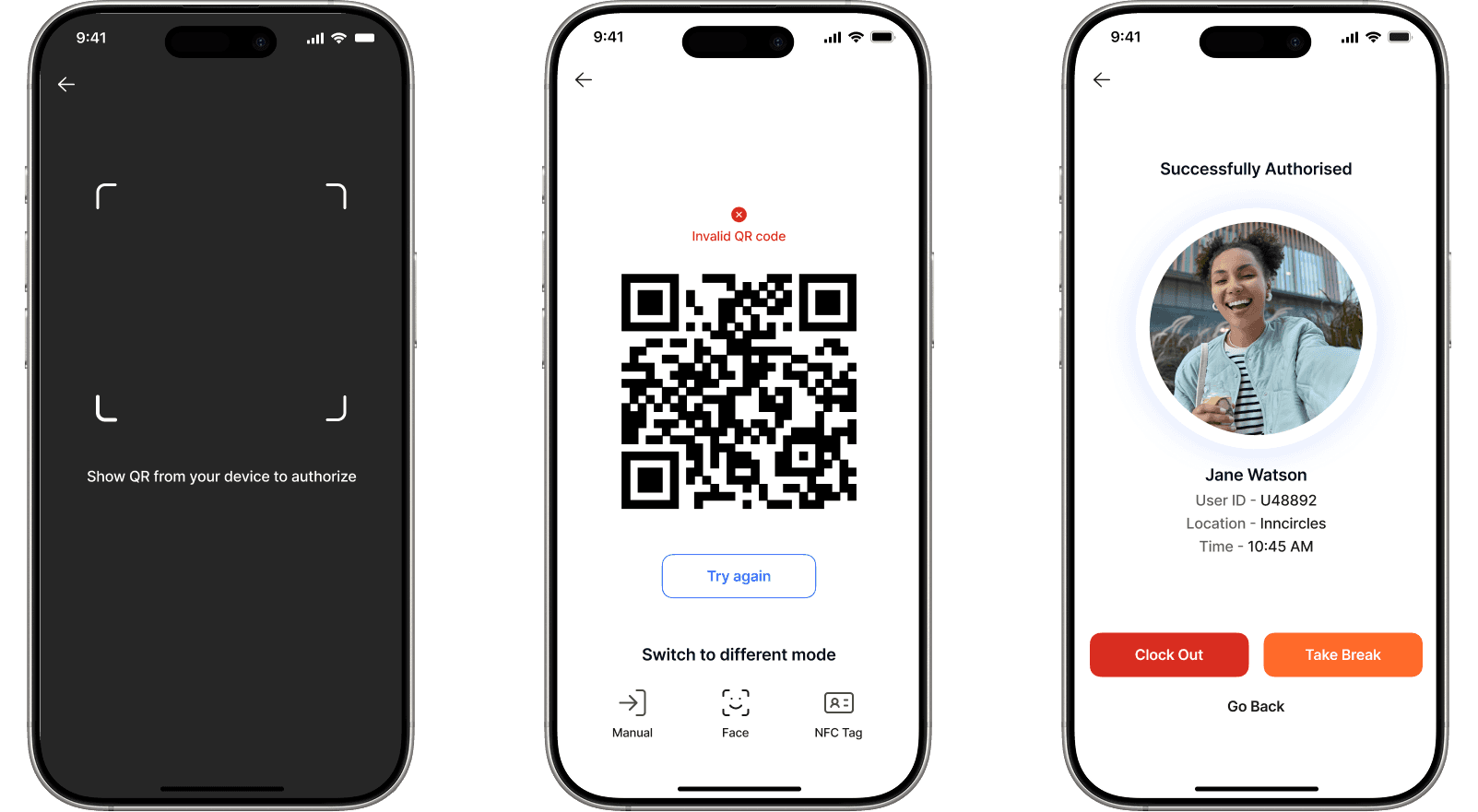
1 - Four auth methods , each with a purpose

1 - Four auth methods , each with a purpose

Not a feature completeness - deliberate coverage. Each method maps to specific site condition

Not a feature completeness - deliberate coverage. Each method maps to specific site condition

Face ID

High-accountability sites. Prevents buddy punching.

High-accountability sites. Prevents buddy punching.

NFC Card

High-volume. Tap and go in under 3 seconds.

High-volume. Tap and go in under 3 seconds.

QR Code

Personal phone preferred over shared kiosk.

Personal phone preferred over shared kiosk.

Manual

Failsafe. Always visible, never primary.

Failsafe. Always visible, never primary.

tt

Face ID

Face ID

tt

tt

NFC Card

NFC Card

QR Code

QR Code

2- Location rules at project level, not worker level

2- Location rules at project level, not worker level

Supervisors think in sites, not workers. One setting propagates to every team on a project — no drift, no per-worker config.
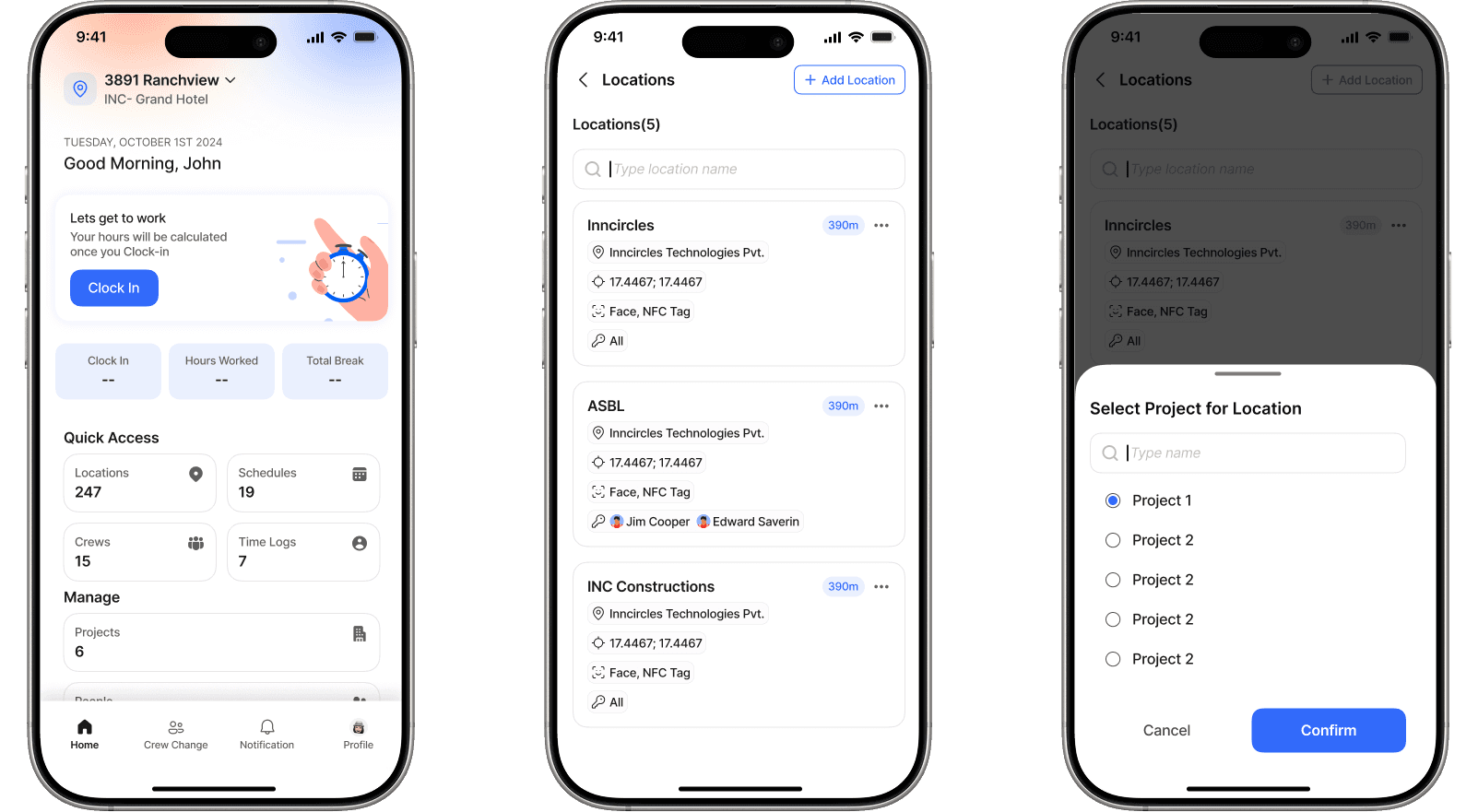
Project is selected first, then location. Reinforces the mental model — location belongs to a project, not a worker

Project is selected first, then location. Reinforces the mental model — location belongs to a project, not a worker

Project is selected first, then location. Reinforces the mental model — location belongs to a project, not a worker

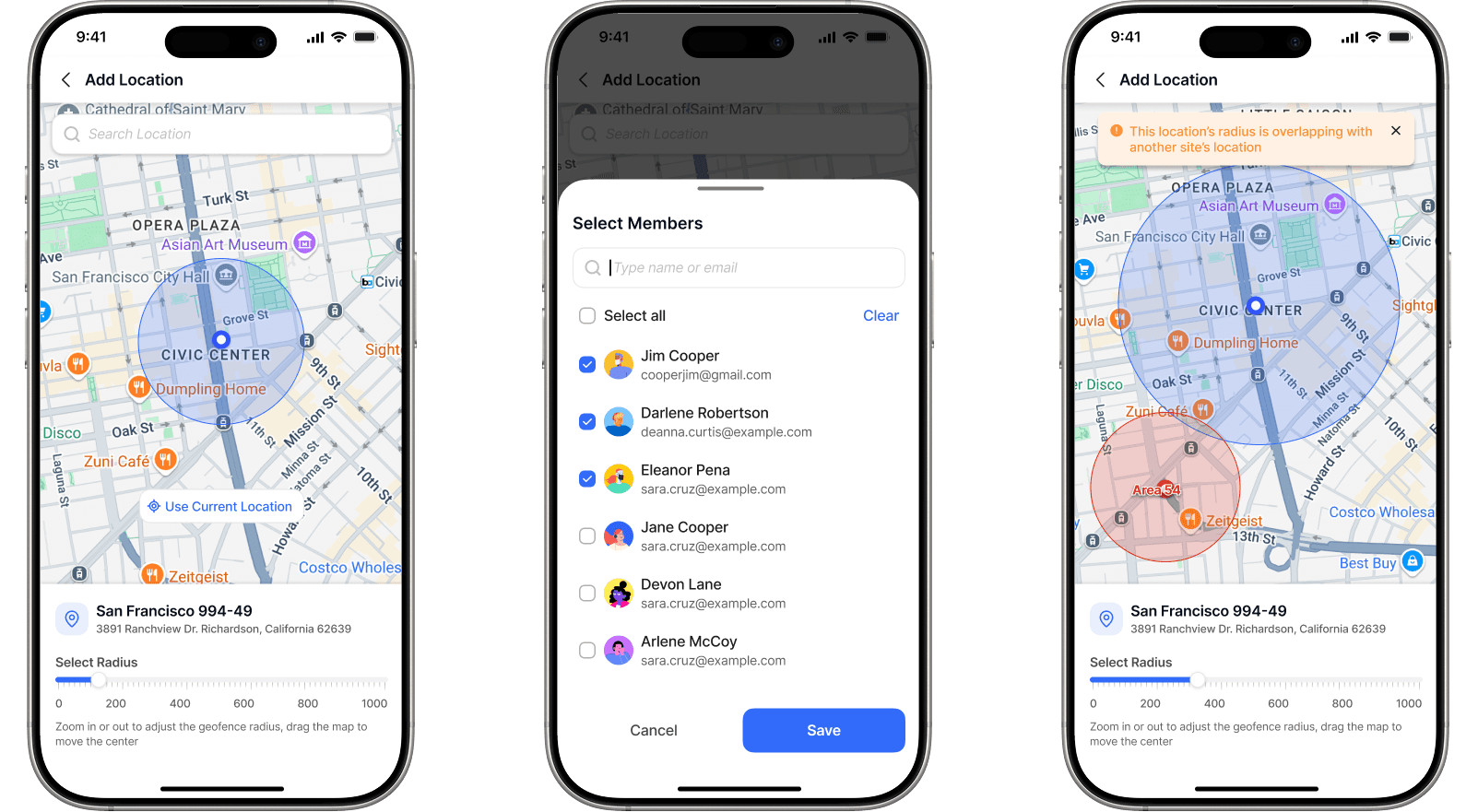
Add team members and select radius.

Add team members and select radius.

Add team members and select radius.

Trade-off

Trade-off

Blunt by design. Subcontractors off-site need exceptions — built as an intentional supervisory override, not a default

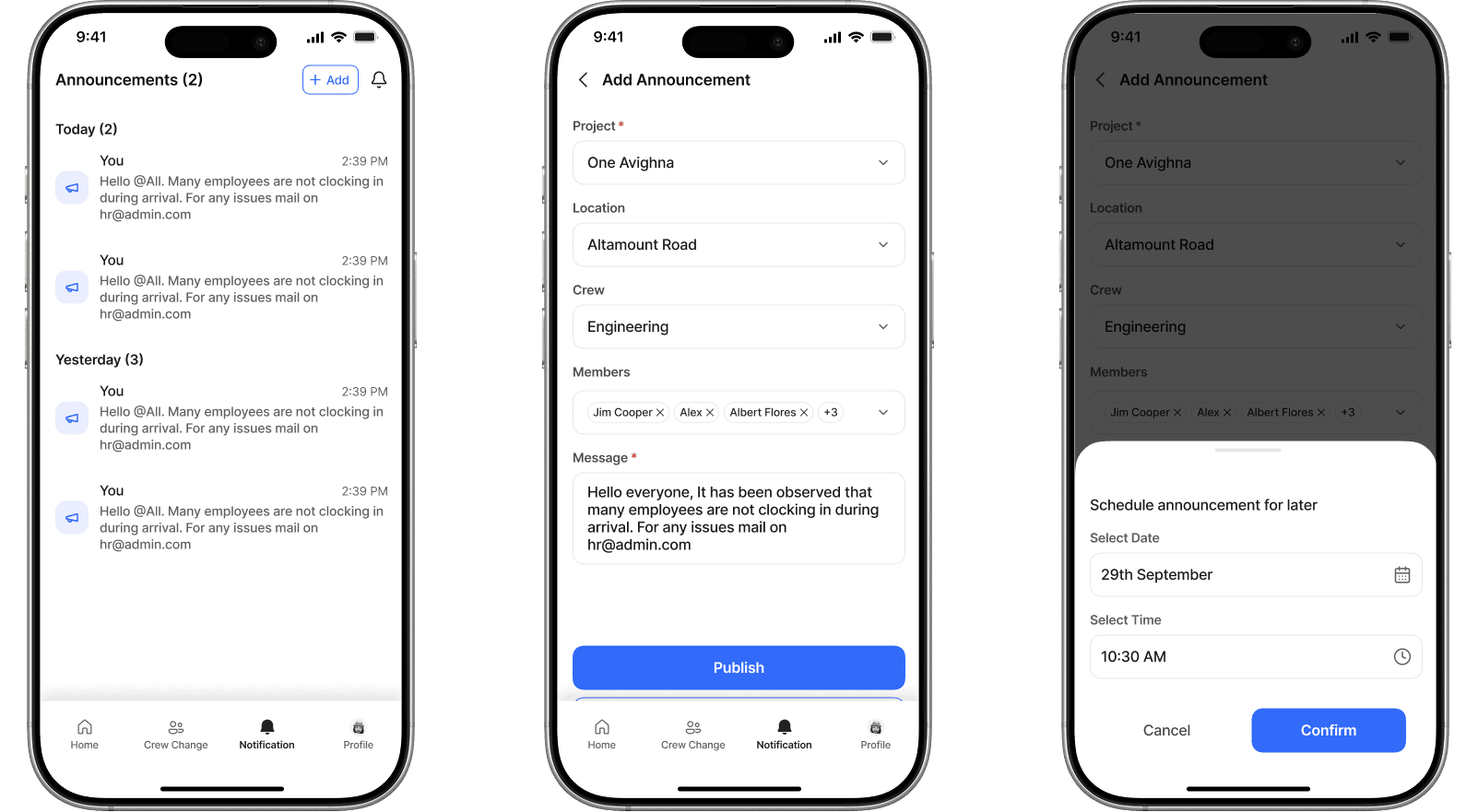
3- Annoucement Notifications

3- Annoucement Notifications

  • Notifications — individual, ephemeral, action-triggered

  • Announcements — broadcast, persistent, schedulable
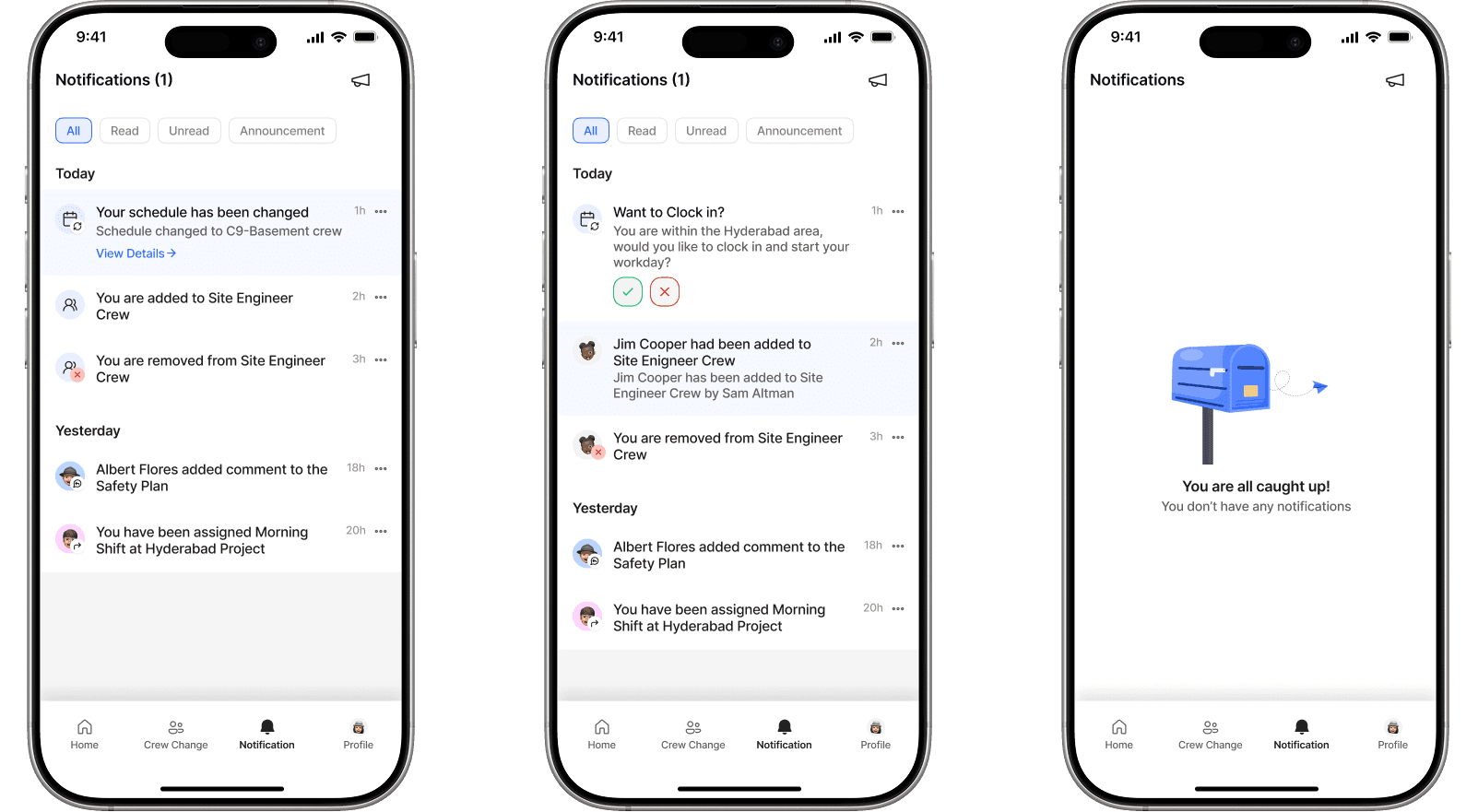
Notification

Notification

Announcement

Announcement

  1. My Contribution

What I Owned

Problem Definition

Translated a vague brief into four concrete failure modes before any screens were drawn

Translated a vague brief into four concrete failure modes before any screens were drawn

Kiosk Mode

Auth logic, all feedback states, session reset, supervisor config screen

Auth logic, all feedback states, session reset, supervisor config screen

Location Architecture

Project-level settings — the call that made multi-team management viable

Project-level settings — the call that made multi-team management viable

Comms System

Split announcements from notifications — changed the IA of the whole feature

Split announcements from notifications — changed the IA of the whole feature

  1. Outcomes

What changed after v1 shipped.

  • First-time kiosk users checked in without assistance — 10s benchmark held

  • Supervisors got real-time site visibility for the first time

  • Supervisors began scheduling next-day announcements within the first week

  • New sites configured in minutes, not per-worker setup sessions

Formal metrics to follow — measurement is ongoing post-launch.

  1. Reflections

What I'd do differently

Invest more in the fallback moment

When face recognition fails at 7am in bad light, the fallback is still clunky. That moment got the least design time and deserved the most.

When face recognition fails at 7am in bad light, the fallback is still clunky. That moment got the least design time and deserved the most.

Define metrics before shipping

On a 0→1 you get to instrument everything from day one. We didn't. Next time, 2–3 measurable outcomes agreed with product before the first screen.

On a 0→1 you get to instrument everything from day one. We didn't. Next time, 2–3 measurable outcomes agreed with product before the first screen.

Copyright © Aniket 2025

Aniket

Create a free website with Framer, the website builder loved by startups, designers and agencies.